






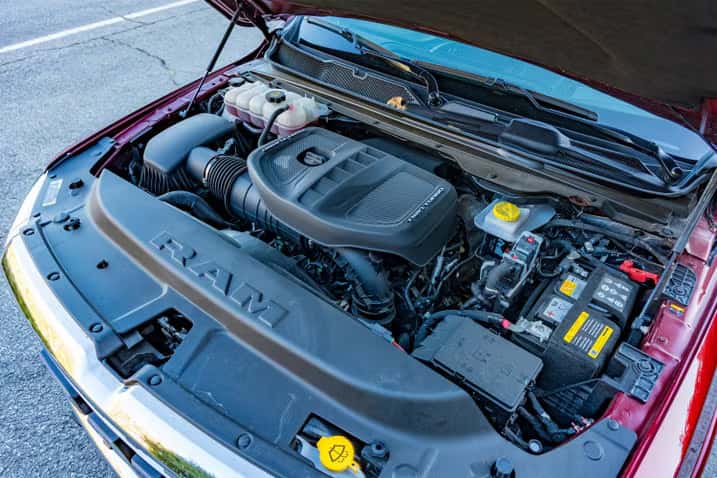
Key Takeaways
- The 5.7L HEMI V8 in the Ram 1500 needs an oil change every 8,000-10,000 miles under normal driving or 5,000-6,000 miles under severe duty, using 0W-20 full synthetic oil.
- The Hurricane twin-turbo engine also runs 0W-20 synthetic, and Ram owners who tow should tighten that interval to 5,000-6,000 miles to protect the turbo bearings.
- Front brake pads last 40,000-60,000 miles under normal use but wear to 30,000-40,000 miles with regular towing; rear pads typically reach 50,000-70,000 miles.
- Transfer case and front/rear differential fluid should be changed every 60,000 miles under normal conditions or every 30,000 miles under severe duty on 4WD trucks.
- Most Ram 1500 owners driving through the Kansas City metro fall under Ram's severe-duty schedule because of winter road conditions, towing, and stop-and-go traffic.
For a truck buyer in the Kansas City area, the Ram 1500 is a workhorse whether it is towing a trailer to Lake of the Ozarks or handling a daily commute on I-435. Getting the maintenance schedule right protects the HEMI or Hurricane engine under the hood and keeps resale value strong. Reed Jeep of Kansas City in Merriam, KS put together this interval-by-interval breakdown for both engine families so owners across Overland Park, Shawnee, and the rest of Johnson County know exactly what their truck needs and when.
Why Do Most Kansas City Ram 1500 Owners Fall Under the Severe-Duty Schedule?
Ram's severe-duty schedule applies to frequent towing, stop-and-go driving, short trips under 10 miles, dusty conditions, and extreme temperatures. Most Ram 1500 drivers commuting through Merriam, Overland Park, and greater Johnson County meet at least one of those conditions regularly, which means the shorter severe-duty intervals — not the normal ones — usually apply to their truck.
Midwest winter freezing, road salt exposure, and hot, humid summers all accelerate wear on seals, fluids, and brake components. Combine that with heavy traffic on I-435 and US-69, and a Ram 1500 driven daily around Kansas City logs more stress per mile than the same truck driven mostly on open highway.
Towing season adds another layer. Ram 1500 owners hauling boats or campers to Lake of the Ozarks, Table Rock Lake, or Truman Lake put extra load on the engine, transmission, and rear differential during those trips, which is exactly the kind of use that pushes a truck into the severe-duty category even if the rest of the week is easy highway commuting.
How Often Should You Change the Oil in a Ram 1500 HEMI or Hurricane?
The 5.7L HEMI V8 uses 0W-20 full synthetic oil and should be changed every 8,000-10,000 miles under normal conditions, or 5,000-6,000 miles if you tow, idle in traffic, or make frequent short trips — the Multi-Displacement System lifters are sensitive to old oil. The Hurricane twin-turbo six-cylinder uses the same 0W-20 synthetic spec, and because turbo bearings run hotter and depend on clean oil for lubrication, towing owners should also stick to the 5,000-6,000 mile interval.
A repeat Jeep and Ram buyer who traded in an older HEMI truck for a newer Hurricane-equipped Ram 1500 often assumes the interval stayed the same. It largely has — both engine families use 0W-20 synthetic — but the Hurricane's twin turbochargers make consistent, on-schedule oil changes even more important than they were on the naturally aspirated HEMI.
The oil life monitor on the dash is a useful guide for highway-heavy driving, but it does not always account for towing loads or extreme heat. When in doubt, follow mileage rather than waiting for the dashboard reminder, and never exceed 10,000 miles or 12 months between changes regardless of what the monitor shows.
When Should You Replace Brake Pads, Rotors, and Tires on a Ram 1500?
Front brake pads typically last 40,000-60,000 miles under normal driving, dropping to 30,000-40,000 miles for trucks that tow regularly, since the front brakes absorb roughly 70% of stopping force. Rear pads last longer, generally 50,000-70,000 miles. Rotors should be inspected at every pad change; scoring or thickness below spec means replacement rather than resurfacing, especially on trucks that tow.
Rotate tires every 7,500-10,000 miles, or at every other oil change, since the Ram 1500's front-heavy weight distribution wears front tires faster — particularly on 4WD trucks. Check alignment annually; Kansas freeze-thaw cycles and pothole damage around Shawnee and Merriam knock settings out of spec faster than smooth highway miles do. Brake fluid is hygroscopic and absorbs moisture over time, so plan on replacing it every 3 years or 45,000 miles, sooner if the fluid looks dark instead of clear amber.
What Are the Transmission, Transfer Case, and Differential Fluid Intervals?
The eight-speed TorqueFlite automatic uses ATF+4 and is factory-filled for the life of the transmission under gentle driving, but trucks that tow or see heavy commuter traffic benefit from a drain-and-fill every 60,000 miles to keep friction modifiers fresh. On 4WD Ram 1500s, transfer case fluid should be changed every 60,000 miles under normal conditions or every 30,000 miles under severe duty such as frequent towing or off-road use, since the case runs hotter during 4WD engagement.
Front and rear differential fluid follows the same 60,000/30,000-mile normal-versus-severe pattern. The rear differential works hardest on towing trucks, where ring-and-pinion gears generate significant heat under load — synthetic gear oil helps, but it still needs changing on schedule rather than being treated as a lifetime fill.
What Services Are Due at the 30,000, 60,000, and 90,000-Mile Milestones?
Spark plug replacement on the Ram 1500 is a mileage-based interval rather than a calendar-based one, so it should be tracked by odometer reading, not years owned. Coolant is a longer-interval item: per Mopar's published maintenance schedule, the first coolant flush is due at 10 years or 150,000 miles, though the coolant level and color should be checked visually at every oil change in between.
Reed Jeep of Kansas City's service department tracks these milestones for customers directly. At each visit, our factory-trained technicians pull the truck's service history, confirm whether the normal or severe-duty schedule applies, and flag anything coming due — oil, brakes, transfer case fluid, or coolant — before it becomes a bigger repair. You can schedule service online rather than guessing at intervals from memory.
What's the difference between a normal and severe-duty service visit?
A severe-duty visit follows the same checklist as a normal visit but on a shortened odometer schedule — oil, transfer case, and differential fluids are changed roughly twice as often. Nothing extra is added; the intervals are simply tighter to compensate for towing, traffic, and temperature extremes.
Does a Ram 1500 need anything extra before winter?
Before Midwest winter sets in, it is worth confirming coolant condition, battery health, and 4WD engagement, since cold starts and road salt add stress that summer driving does not.
Sources
Frequently Asked Questions
How often should I change the oil in my Ram 1500 HEMI?
The 5.7L HEMI V8 uses 0W-20 full synthetic oil and should be changed every 8,000-10,000 miles under normal driving conditions. If you tow frequently, drive in stop-and-go traffic, or operate in dusty conditions, switch to the severe-duty schedule of every 5,000-6,000 miles to protect the Multi-Displacement System lifters.
When should I replace the brake pads on my Ram 1500?
Front brake pads on the Ram 1500 typically last 40,000-60,000 miles depending on driving style and towing habits. Rear pads last longer at 50,000-70,000 miles since the front brakes handle most of the stopping force. If you tow regularly, expect to replace front pads closer to 30,000-40,000 miles.
Does the Ram 1500 have a severe-duty maintenance schedule?
Yes. Ram defines severe duty as frequent towing, stop-and-go driving, short trips under 10 miles, dusty or off-road conditions, and extreme temperatures. The severe schedule shortens oil change intervals to 5,000-6,000 miles and moves up fluid changes for the transmission, transfer case, and differential. Most Kansas City-area drivers who tow or commute in heavy traffic should follow the severe schedule.
When should the transfer case fluid be changed on a 4WD Ram 1500?
Transfer case fluid should be changed every 60,000 miles under normal conditions or every 30,000 miles under severe-duty use such as frequent towing or off-road driving. The transfer case uses a specific fluid type, so check your owner's manual for the correct specification, since using the wrong fluid can damage the synchronizers.
Schedule Ram 1500 Service at Reed Jeep of Kansas City in Merriam
Reed Jeep of Kansas City's service department is staffed by factory-trained technicians who work on Ram 1500 trucks with HEMI and Hurricane engines every day. We stock OEM fluids and parts and can confirm whether your truck falls under the normal or severe-duty schedule based on your actual driving. With Midwest winter freezing and road salt ahead each year, now is a good time to get transfer case fluid, brakes, and coolant checked before cold weather adds extra strain. Schedule your Ram 1500 service appointment online, or get directions to our Merriam showroom on Google Maps and stop by 7020 W Frontage Rd.